
The Moveee team
Free coaching · a real route for every ride
Here's some money-saving news: you don't need to buy a smart trainer to train with power indoors. If you already own a basic "dumb" trainer — one with fixed or manual resistance — you can turn it smart with a power meter (or a cheap sensor) and your browser, and get most of what a smart trainer gives you. Here's how, honestly, including where the limits are.
What "smart" really means — and what you can fake
A smart trainer does two things: it measures your power, and it changes its own resistance on command. A dumb trainer does neither. The good news is that the measuring half — the part that actually matters for training — is easy to add. The automatic resistance half is the one thing a dumb trainer genuinely can't do; you change gears yourself instead.
Power meter (best)
AccurateIf your bike has a power meter, a browser app reads it directly over Bluetooth. You get true watts on a dumb trainer — the resistance just won't change automatically.
Speed/cadence sensor + virtual power
EstimatedA cheap speed sensor plus your trainer's known resistance curve lets the app estimate power. Not lab-accurate, but consistent enough to train by.
Nothing yet
Add a sensorA speed/cadence sensor is inexpensive and the single best upgrade for a dumb trainer. A power meter is the step up when you're ready.

How to train on a dumb trainer
- Pair your power source — a power meter, or a speed sensor for virtual power — to a browser app over Bluetooth.
- Set your resistance manually (pick a gear, and set the trainer's resistance lever if it has one).
- Ride to the numbers. For intervals, shift gears to hit the target watts on screen — you're doing manually what ERG does automatically.
- Save the ride with full power data, and send it to Strava.
It takes a touch more attention than ERG on a smart trainer, but the training stimulus is real — power is power.
A free browser app that reads your power
Moveee Indoor reads a Bluetooth power meter or sensor directly, so a dumb trainer still gets you a real, recorded, power-based ride on a real 3D road rebuilt from map data. It runs in the browser with nothing to install, it's free while in alpha, and rides save with full power data to your Moveee plan and Strava.
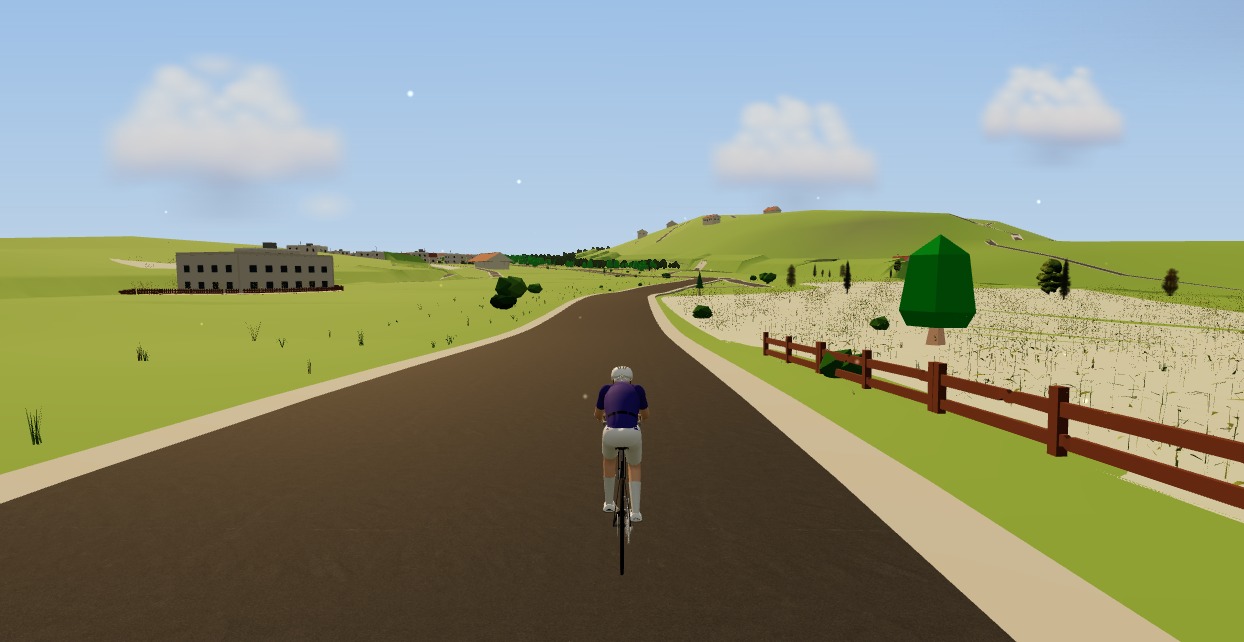
Before you spend on a smart trainer, see how far a sensor and a browser tab get you. For a lot of riders, that's the whole winter sorted.
Keep reading

How to build a cycling training plan around a full-time job
You don't need 12-hour weeks to get properly fast — you need the right 6–8 hours, placed where your life can actually hold them. Here's how to anchor a working week around two quality sessions and one long ride, what to cut first when work explodes, and why a plan that adapts beats a plan that's perfect.

How many TSS per week do you actually need?
TSS puts one number on how much training you've done — but how much is enough, and when does more stop helping? Realistic weekly ranges by rider level, the ramp-rate rule that keeps you improving without breaking, and why chasing the number corrupts the training it's meant to measure.