
The Moveee team
Free coaching · a real route for every ride
Garmin's Tacx trainers are superb bits of kit, and the Tacx Training app is perfectly decent — but it isn't the only thing that can drive your trainer, and it isn't for everyone. If you're after a Tacx app alternative — something simpler, free, or just different — here's how to control a Tacx from a browser tab, no subscription and no big download.
Which Tacx trainers this works with
Tacx Neo / Neo 2 / Neo 2T / Neo 3M
Direct-drive. Full simulation and ERG control.
Tacx Flux / Flux 2 / Flux S
Direct-drive. Controls resistance and holds ERG.
Tacx Flow Smart
Wheel-on. Pairs and takes resistance commands the same way.
Tacx Boost (with a paired power/speed source)
Basic controllable / read power from a sensor.
If your Tacx is a "Smart" model, it advertises standard Bluetooth control that any modern trainer app can use.

What a good Tacx alternative should keep
- Resistance simulation — the trainer gets harder on climbs, easier on descents.
- ERG mode — set a target wattage and the trainer holds it while you turn the pedals.
- Accurate recording — power, cadence, speed and heart rate, captured for the whole ride.
- An easy export — the finished ride lands on Strava (and in your training log).
A free, browser-based Tacx app alternative
Moveee Indoor ticks all four, and adds something the standard apps don't: real roads. It runs entirely in a browser tab — Chrome or Edge, nothing to install — pairs your Tacx over Bluetooth in one click, and rebuilds your own saved routes in 3D from real OpenStreetMap and elevation data. The gradient of the road drives your Tacx's resistance, ERG holds your intervals, and rides save with full power data to your Moveee plan and Strava.
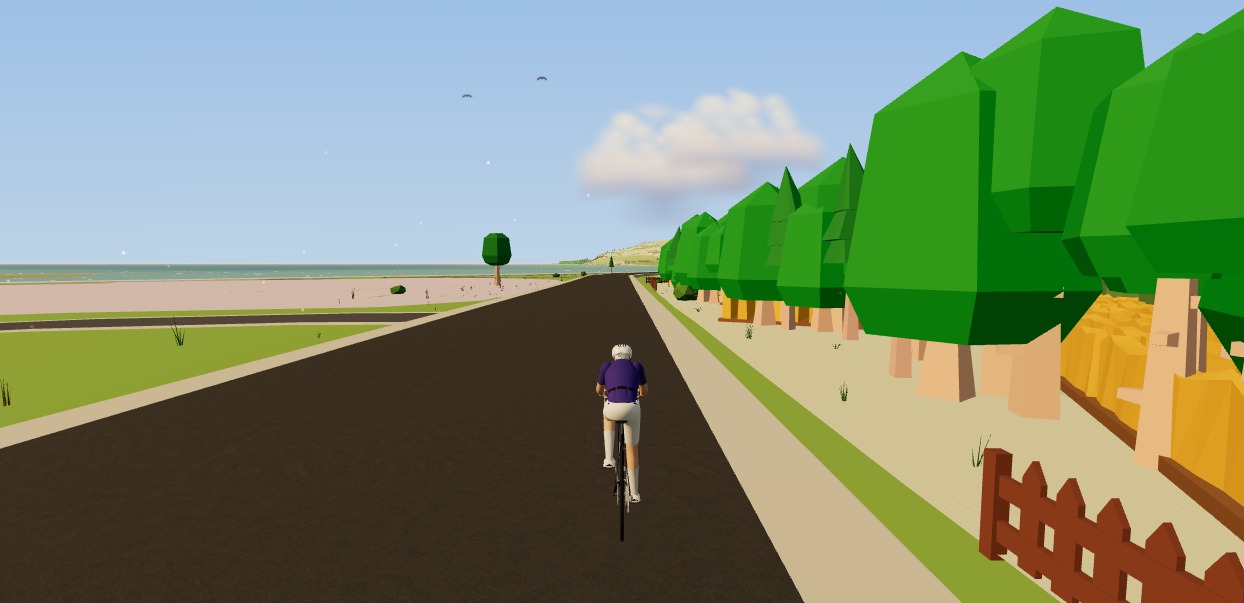
It's young and there's no racing scene yet — but if you just want a clean, free way to ride the Tacx you already own, without the Tacx app and without a Zwift subscription, it's about as direct as it gets.
Keep reading

How to build a cycling training plan around a full-time job
You don't need 12-hour weeks to get properly fast — you need the right 6–8 hours, placed where your life can actually hold them. Here's how to anchor a working week around two quality sessions and one long ride, what to cut first when work explodes, and why a plan that adapts beats a plan that's perfect.

How many TSS per week do you actually need?
TSS puts one number on how much training you've done — but how much is enough, and when does more stop helping? Realistic weekly ranges by rider level, the ramp-rate rule that keeps you improving without breaking, and why chasing the number corrupts the training it's meant to measure.