
The Moveee team
Free coaching · a real route for every ride
ERG mode is the feature that makes structured indoor training almost effortless to execute: you set a target wattage, and the trainer holds you there no matter your cadence. It used to require installing a desktop app. Not any more — ERG mode in the browser works on any modern smart trainer, from a single tab, for free. Here's how.
What ERG mode actually does
Normally your power depends on how hard you push and what gear you're in. In ERG mode, you hand that job to the trainer: you name a target, and the trainer continuously adjusts its own resistance to keep you at that exact wattage. Spin at 85 rpm or 95 rpm — the watts stay put. Your only job is to keep pedalling.
You set a target
Say 220 W for a 5-minute interval. The workout knows the target for every block.
The browser sends it to the trainer
Over Web Bluetooth, the tab tells the trainer: hold this rider at 220 W.
The trainer adjusts resistance
Pedal slower and it makes it harder; pedal faster and it eases — to keep you at 220 W.
You just turn the pedals
No shifting, no chasing a number. Hit the interval, recover, repeat.

Yes, the browser can really do this
The same standard that lets a web page read your power (FTMS / Fitness Machine Service) also lets it command the trainer's target. So a browser tab in Chrome or Edge can drive ERG mode exactly like a native app — no install, no dongle. If your trainer does ERG in its own app, it'll do ERG in the browser.
Escaping the "spiral of death"
One thing worth knowing: if you let your cadence fall too far in ERG mode, the trainer keeps cranking resistance to hold the watts, which slows you further — the dreaded spiral. The fix is simple: keep your cadence up, and if you do bog down, ease off for a second or shift so the trainer can recover. Good apps also let you nudge the target on the fly.
ERG in the browser, on a real road, free
Moveee Indoor holds ERG targets from a browser tab on any standards-based smart trainer — so your intervals are precise — while you ride your own saved routes rebuilt in 3D from real map data. Nothing to install, free while in alpha, and rides save with full power data to your Moveee plan and Strava.
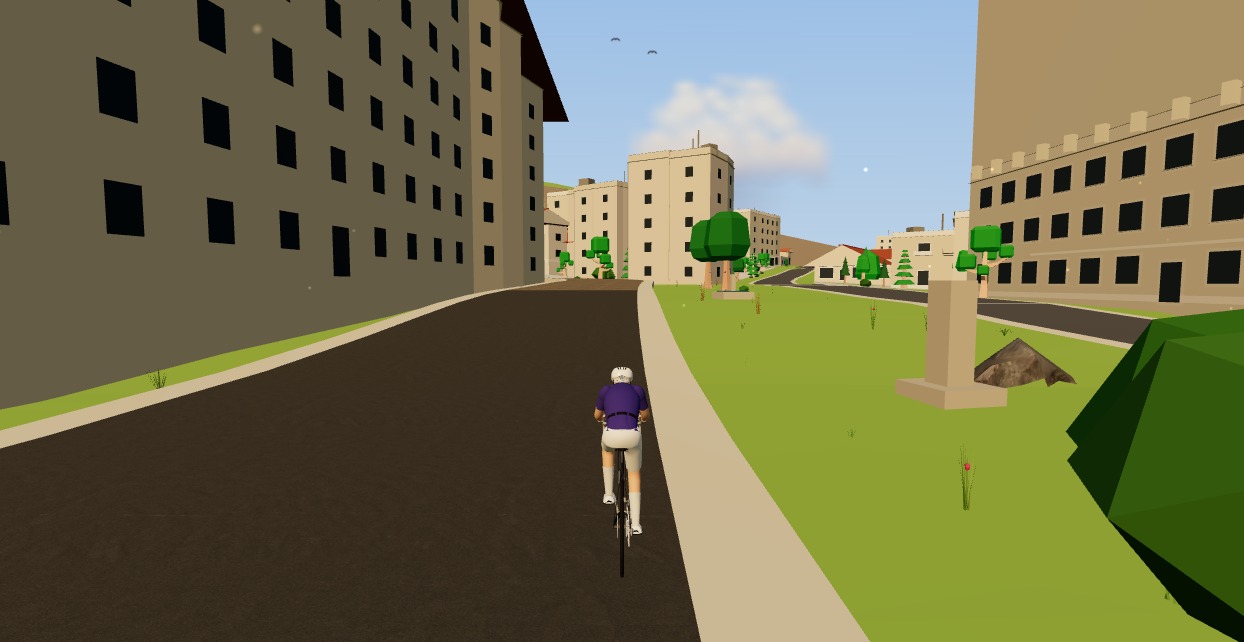
Set the target, keep the legs turning, let the trainer do the rest. That's ERG — and it lives in a browser tab now.
Keep reading

How to build a cycling training plan around a full-time job
You don't need 12-hour weeks to get properly fast — you need the right 6–8 hours, placed where your life can actually hold them. Here's how to anchor a working week around two quality sessions and one long ride, what to cut first when work explodes, and why a plan that adapts beats a plan that's perfect.

How many TSS per week do you actually need?
TSS puts one number on how much training you've done — but how much is enough, and when does more stop helping? Realistic weekly ranges by rider level, the ramp-rate rule that keeps you improving without breaking, and why chasing the number corrupts the training it's meant to measure.